

From Farm to Flour: How Ragi is Procured, Processed, and Made into Nutritious Ragi Flour
- Posted by:
- 0 Comments
In an age where health and sustainability are top priorities, traditional grains are making a powerful comeback. Among them, Ragi—also known as finger millet—stands tall as a powerhouse of nutrition and resilience. But have you ever wondered how this humble grain travels from the farm to your plate as fine, wholesome ragi flour? Let’s take a journey through the lifecycle of ragi—from cultivation to milling—and understand what makes it so special.
? Step 1: Cultivation – Growing Ragi the Traditional Way
Ragi is primarily cultivated in the semi-arid and hilly regions of India, especially in Karnataka, Tamil Nadu, Andhra Pradesh, and parts of Maharashtra. It is a drought-resistant crop, requiring minimal irrigation, which makes it ideal for sustainable farming.
- Sowing Time: Usually planted during the monsoon (June–July) and harvested by October or November.
- Soil Preference: Thrives in well-drained, red or black loamy soils.
- Minimal Inputs: Unlike high-maintenance grains, ragi requires fewer chemical fertilizers or pesticides, making it a preferred choice for organic farming.
? Step 2: Harvesting and Drying – Preserving the Goodness
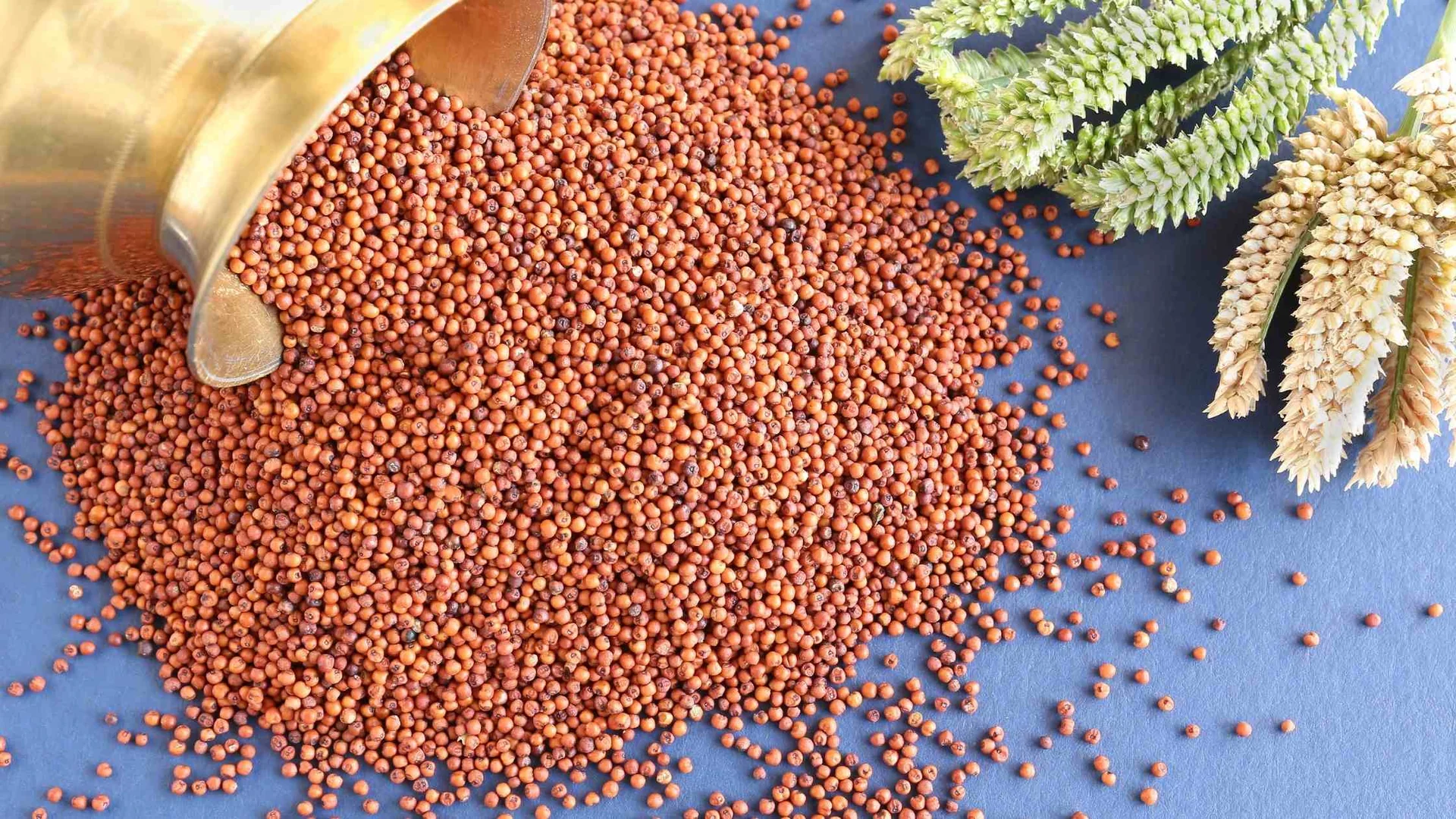
Once mature, ragi stalks are harvested manually or with basic machinery. The tiny, bead-like grains are tightly packed in the finger-like spikes of the plant (hence the name finger millet).
- Threshing: The harvested spikes are dried under the sun for a few days before being threshed to separate the grains.
- Winnowing: Traditional winnowing techniques help remove husk and debris, leaving behind clean grains ready for processing.
? Step 3: Cleaning and Sorting – Quality Control at Its Best
Before processing into flour, the grains go through a rigorous cleaning process:
- Mechanical Cleaning: Grains are passed through sieves and air blowers to eliminate stones, dust, and broken grains.
- Grading: High-quality grains are sorted based on size and color to ensure uniformity in texture and taste after milling.
This step is crucial to retain the nutritional value and purity of the final product.
? Step 4: Roasting (Optional) – Enhancing Flavor and Shelf Life
Some processors choose to lightly roast ragi before milling:
- Improved Digestibility: Roasting breaks down certain anti-nutrients like phytates.
- Flavor Enhancement: It imparts a nuttier aroma and richer taste.
- Longer Shelf Life: Reduces moisture content and enhances storage stability.
Roasting is optional but popular, especially for preparing ragi flour used in baby food or health mixes.
? Step 5: Milling – From Grain to Fine Flour
The cleaned (and optionally roasted) grains are now ready for milling:
- Stone Grinding: Traditionally, ragi was ground on stone mills, which preserved nutrients and added a rustic texture.
- Modern Milling: Today, advanced roller or hammer mills are used for large-scale production, delivering a consistent, fine flour.
The milled flour is passed through fine mesh sieves to ensure uniform particle size before being packed.
? Step 6: Packaging – Sealing in Freshness
Once milled, ragi flour is carefully packed to retain its freshness and nutrition:
- Air-tight Packaging: Prevents moisture entry and microbial spoilage.
- Labeling: Includes nutritional information, batch number, and best-before dates.
- Storage Tips: Ragi flour is best stored in a cool, dry place, and used within a few months of milling.
? Final Step: From Kitchen to Wellness
Ragi flour finds its way into a variety of nutritious dishes:
- Ragi dosa and roti in South Indian homes
- Ragi malt – a popular drink for kids and adults
- Ragi cookies and pancakes as healthy snack alternatives
It’s a gluten-free grain packed with calcium, iron, and dietary fiber—making it ideal for diabetics, fitness enthusiasts, and growing children.
? Conclusion: A Grain of the Future
The journey of ragi from farm to flour is a testament to its versatility, nutrition, and sustainability. In embracing ragi, we are not just choosing health for ourselves, but also supporting local farmers and eco-friendly agriculture.
Next time you enjoy a soft ragi roti or sip a warm cup of ragi malt, remember—you're tasting the result of centuries-old wisdom and mindful farming.

Comments (0)