

What Is Bee Propolis?
- Posted by:
- 0 Comments
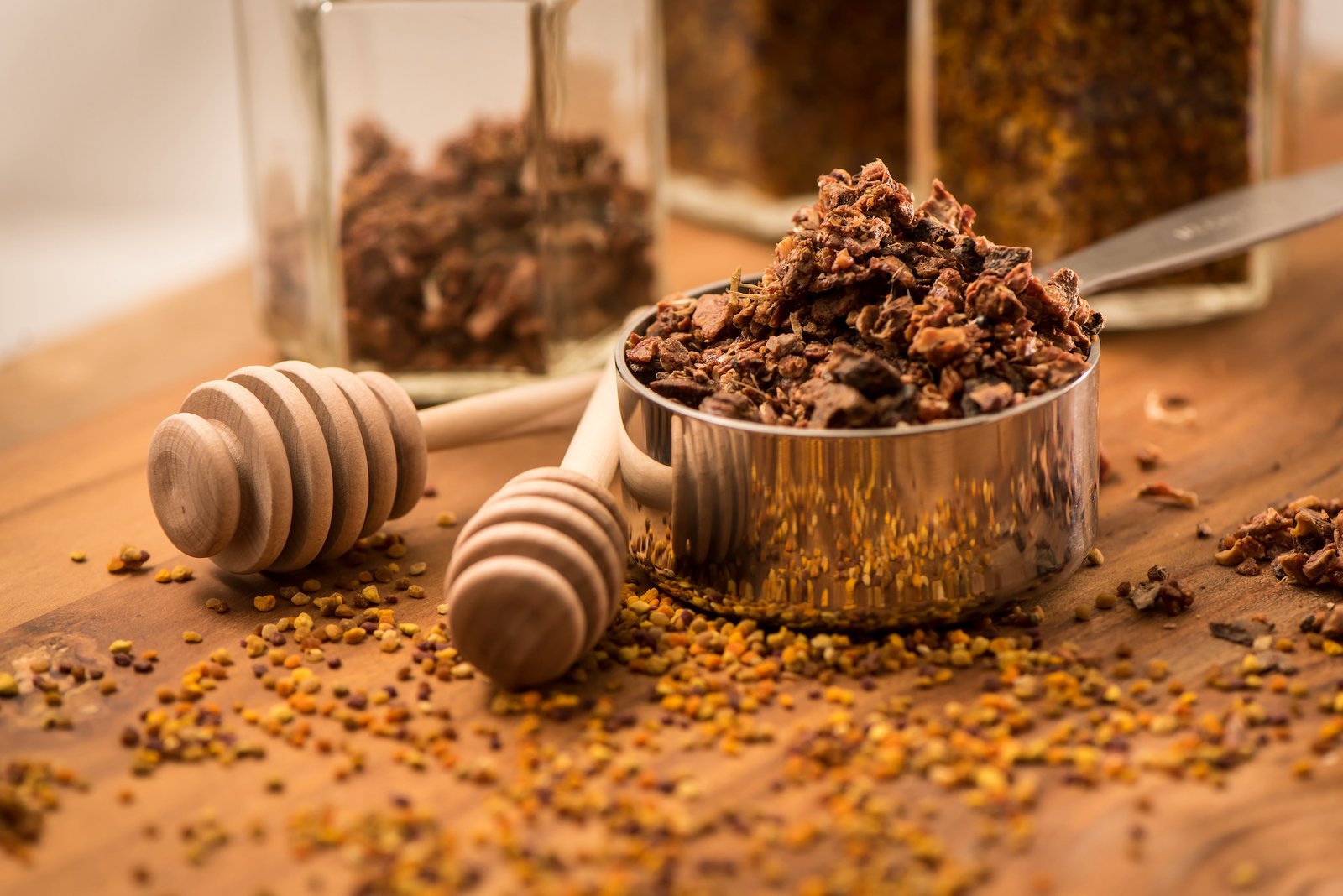
Bee propolis is a resinous mixture that honey bees produce by combining saliva and beeswax with exudates gathered from tree buds, sap flows, or other botanical sources. Also known as "bee glue," propolis is used by bees to seal gaps in the hive, smooth internal walls, and protect the colony from external threats such as bacteria, fungi, and intruders.
Bee propolis is packed with over 300 natural compounds, making it a true biochemical
powerhouse. The main active components include:
? Flavonoids
? Phenolic acids
? Terpenes
? Essential oils
? Amino acids and vitamins (like B1, B2, B6, C, E)
? Minerals (magnesium, calcium, zinc)
Chemical Composition
Propolis contains over 300 compounds, primarily:
- Resins and balsams (50–60%): From plant sources, rich in flavonoids and phenolic acids.
- Beeswax (30–40%)
- Essential oils (5–10%)
- Pollen (5%)
- Other organic compounds: Including vitamins (e.g., B1, B2, B6, C, E), minerals, and amino acids.
The exact composition depends on the geographic location, plant sources, and season.
How Bees Use Propolis
Bees use propolis to:
- Seal cracks and strengthen the hive structure.
- Mummify intruders that are too large to remove (e.g., dead rodents) to prevent decay and disease.
- Reduce vibration and temperature fluctuations.
- Sterilize the hive: Its antimicrobial properties protect against pathogens.
Health Benefits of Propolis
1. Antimicrobial Properties
Propolis has strong antibacterial, antiviral, and antifungal activity. It can inhibit the growth of pathogens such as:
- Staphylococcus aureus
- Candida albicans
- Influenza virus
2. Anti-inflammatory Effects
Flavonoids in propolis reduce inflammation by inhibiting enzymes like COX-2, making it useful for conditions like arthritis and skin irritation.
3. Antioxidant Activity
Rich in polyphenols, propolis neutralizes free radicals, helping prevent cellular damage and slowing aging.
4. Wound Healing
Topical application of propolis accelerates healing in burns, cuts, and ulcers by promoting tissue regeneration.
5. Oral Health
Used in toothpaste and mouthwashes, propolis reduces dental plaque, gingivitis, and mouth ulcers thanks to its antimicrobial and anti-inflammatory effects.
6. Immune System Support
Propolis stimulates antibody production and enhances the activity of white blood cells, boosting immune response.
Conclusion
Bee propolis is a natural substance with a wide array of medicinal properties, including antimicrobial, anti-inflammatory, antioxidant, and immune-boosting effects. Used by bees to protect their hives, it has become a valuable component in natural health products. While generally safe for most, it's important to use propolis with awareness of potential allergies and interactions.

Comments (0)